


Redox Flow at the Hydrogen Technology World Expo 2026
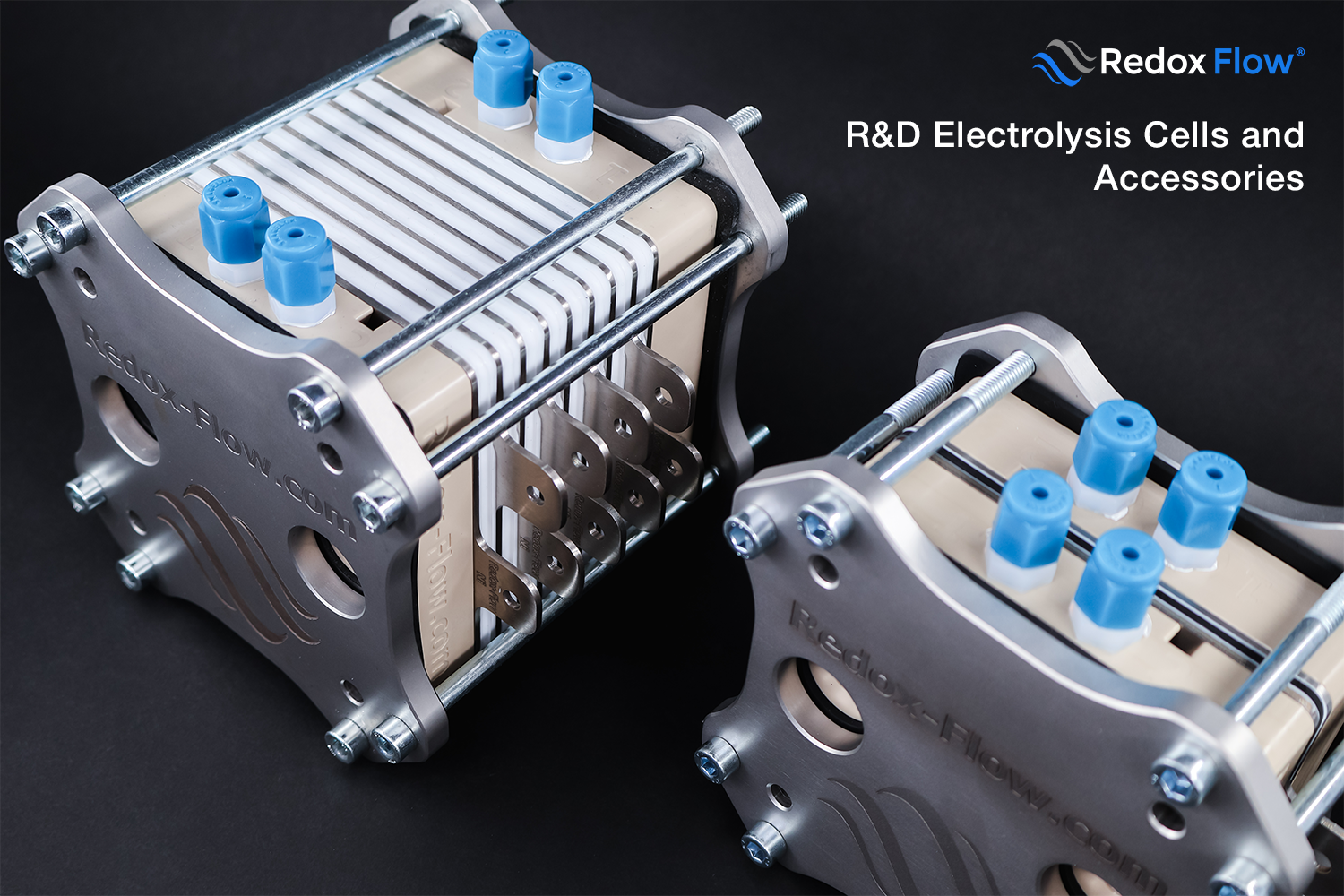
Redox Flow, the Danish company behind a modular platform of electrochemical flow cells, is exhibiting at Hydrogen Technology World Expo 2026, running October 20–22 at Hamburg Messe alongside Carbon Capture Technology World Expo. In Hall B6, the team will show how researchers can move from early-stage catalyst screening to full stack validation on one connected platform, without switching equipment at every step.
Redox Flow started as a PhD project that identified a simple gap: electrolysis R&D needed cells that could adapt to a researcher's setup, not the other way around. Five years on, that idea has grown into a company with more than 1,000 customers worldwide, including research groups at leading universities and national laboratories across Europe, North America, and beyond.
At Hydrogen Technology World Expo, Redox Flow will present its electrolysis range end to end. The M-Cell, at 1 cm², is built for early catalyst and membrane screening, running in closed, open, half-cell, or three-compartment mode. From there, the X-Cell family, available at 2.5 × 2.5 cm and 5 × 5 cm active areas, supports alkaline, AEM, and PEM water electrolysis as well as CO2 electrolysis, with interchangeable current collectors and 3- or 4-compartment configurations for gas-phase and liquid-phase CO2 reduction studies. For teams scaling toward pilot systems, the X-Stack stacks up to 9 cells in series, with a flow-field variant for testing thin electrodes at stack level.
The company will also highlight two inline diagnostic tools built for exactly this kind of work. Redox Flow’s OCV cell features a unique design with a central chamber, allowing for separating anode and cathode overpotentials during operation, referenced against an internal reference electrolyte. The UV/VIS fiber-optical flow cell adds real-time spectroscopy, with a variable optical path length from 0.05 mm to 8 mm and an internal hydraulic bypass that keeps pressure drop low even at high flow rates, so reactions can be monitored as they happen rather than after the fact.
Visitors in Hall B6, Booth 6J45 can see the full range in person, from single-cell screening setups to stack-level testing, and talk through what a complete lab setup would look like for their own research.