






CO2 Collection, Transportation and Disposal Service
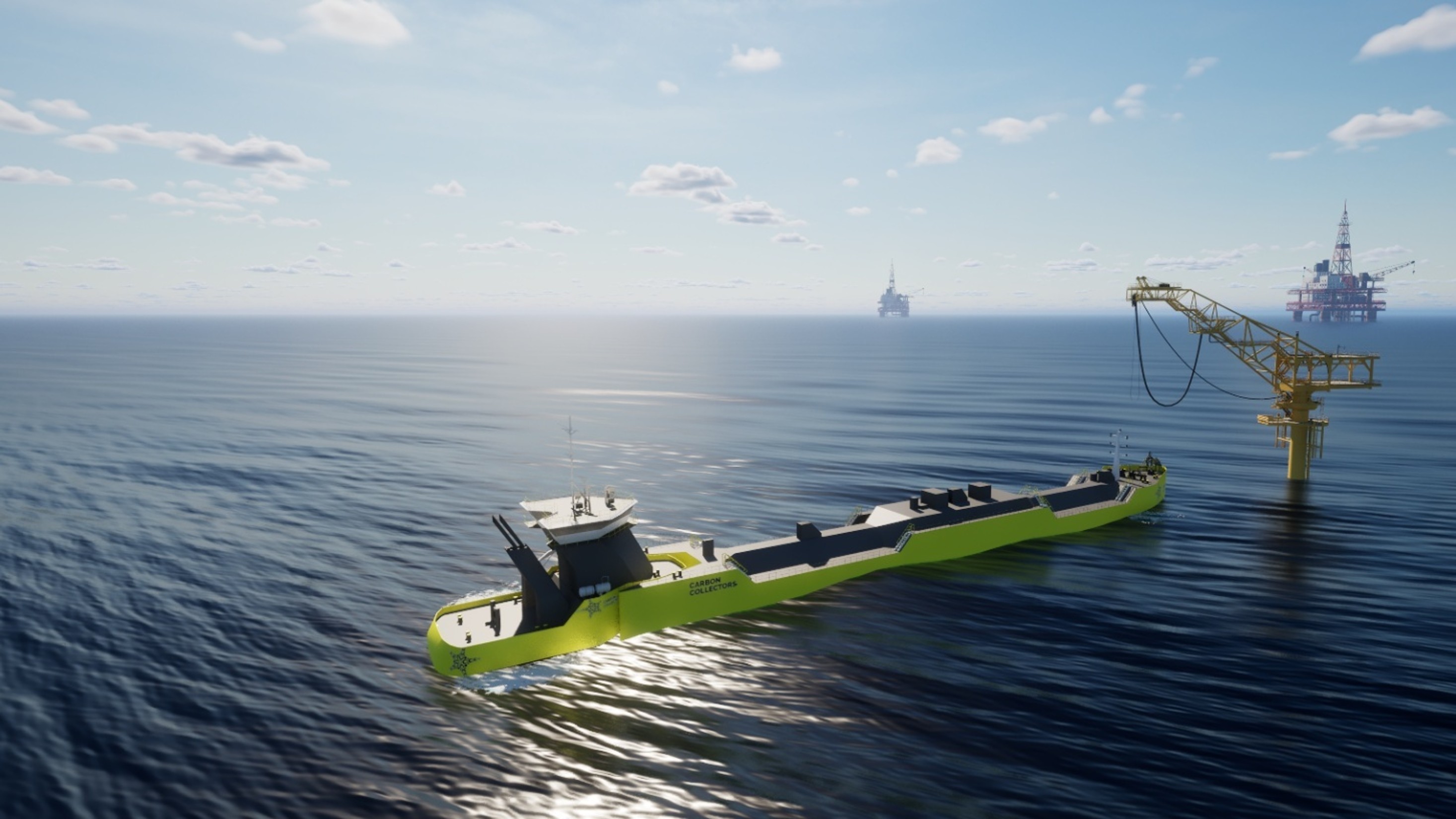
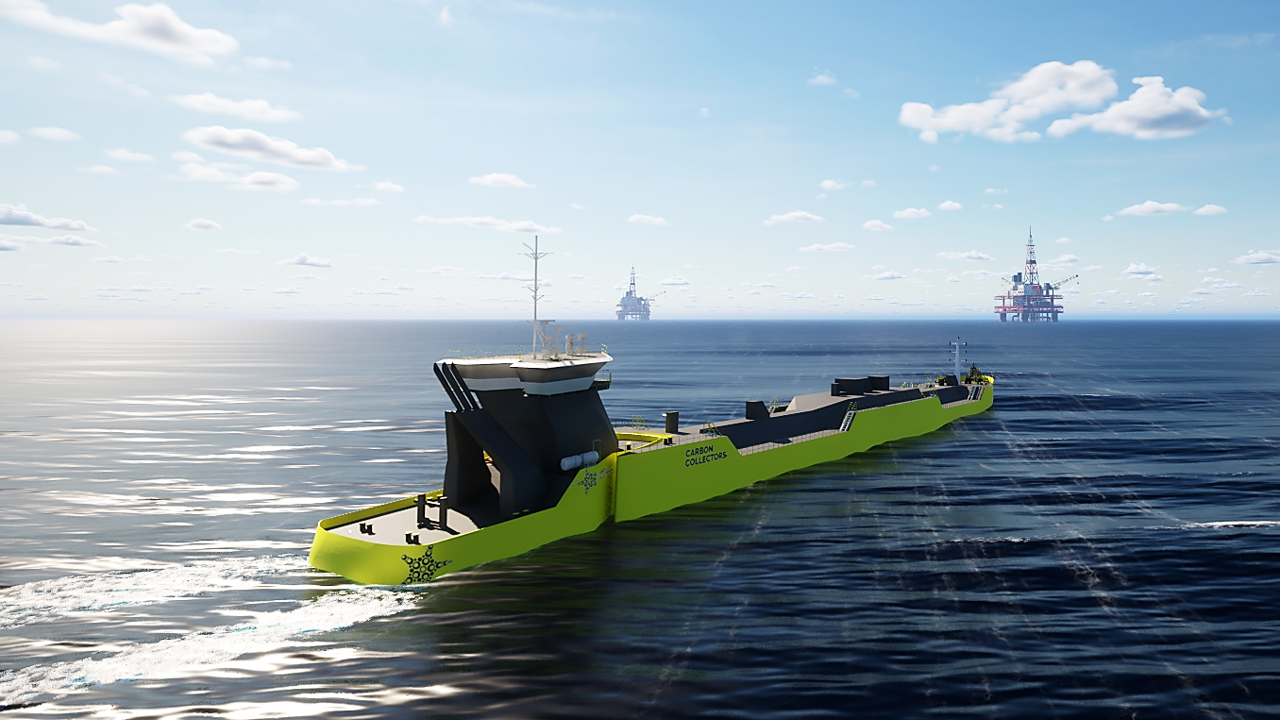
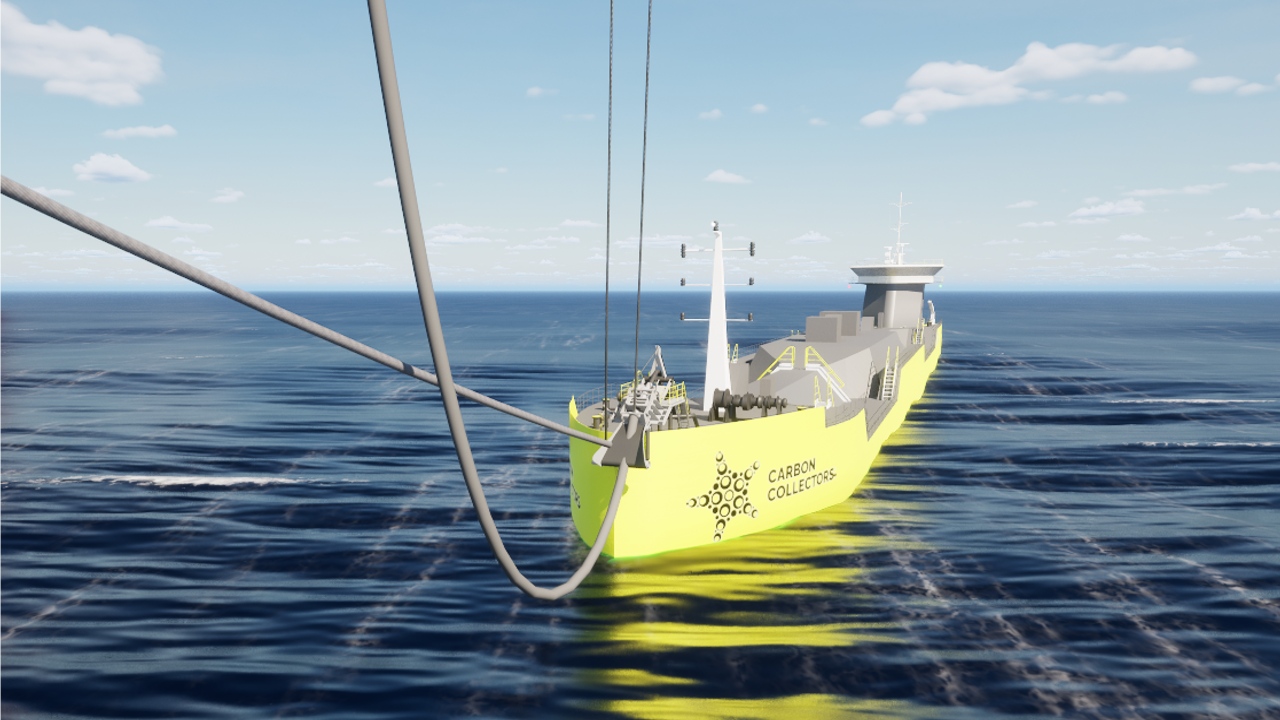
The pusher tug-barge combination will sail to the injection location and moor to a TOU Tower Offloading Unit), which is placed at the border of the 500 m zone of the host storage facility and connected with the host storage facility through a flexible flowline. Since the mooring of the tug-barge combination and the wellhead platform are separated, with the reuse of the existing infrastructure limited to the wellhead manifold, wells and associated valving, little or no modifications are required to make the facility suitable for injection and storage of CO2. A rotating loading arm on the TLU allows for the fluid and power transfer between the barge and the TOU. The CO2 is pumped directly from the barge, via the TOU, into the storage reservoir. All power required for the pumps will be generated by the tug. Due to the ambient temperature conditions, no offshore conditioning is required before injection.
Both pressure and temperature affect a large number of the components of the supply chain including material choices, transport volumes, injection philosophies and safety considerations. Hence, trade-offs between cost and operational complexity must be considered in choosing the most appropriate transport condition. Carbon Collectors have decided to transport the CO2 at an ambient temperature and high pressure, 5°C and 40 bar.
These transport conditions offer a number of benefits:
• Firstly, CO2 can be pumped directly as a liquid from the barge into the wells. A CO2 phase change (liquid to gas) and very low well head temperatures (‘flashing’) are largely avoided without the need for additional heating offshore. Avoiding the need for heating reduces the equipment required for the offshore offloading and injection. More precisely, all power required for the injection can be delivered directly by the tug once it is connected to the TLU.
• Additionally, Life Cycle Costs (LCC) are low. It has previously been demonstrated that the lowest LCCs for the liquefaction step (refrigeration and compression) at various CO2 transport conditions are achieved at CO2 pressures between 30 and 45 bar. Direct injection is also estimated to have the lowest unit costs for CO2 injection.
• Another benefit of higher-pressure transport is found in dealing with impurities in the CO2. Carbon Collectors will, at the outlet of the CO2 capture plant, condition and liquefy the CO2 to meet the ambient transport conditions of ~40 bar, 5°C and the injection requirements of the host’s storage reservoir. This will typically involve reducing the water content by use of a conventional regenerative absorption bed process (such as a molecular sieve or silica gel) and using a catalyst layer within the absorption bed to reduce oxygen levels by catalytic oxidation. Impurities in the CO2 stream can have negative effects on transport, injection and storage of CO2. It has been shown that the impurity impact increases with decreasing temperature. That means the Carbon Collectors solution has a higher tolerance for impurities that only impact the phase envelope than lower temperature solutions. The level of other impurities allowed in the CO2 is assessed for both transport and reservoir compatibility against the criteria of safety, integrity and the impact on the phase envelope. While safety and integrity criteria give rise to specific component concentration limits, for the likes of hydrogen sulphide and oxides of sulphur and nitrogen, the phase envelope is impacted to different degrees by the likes of hydrogen, methane and nitrogen.
With reference to the last statement, it makes more sense to provide a functional specification for the impact on the phase envelope rather than a component by component limit as this gives more flexibility to accept CO2 from different sources where some components which impact the phase envelope are absent. The functional specification adopted for the phase envelope is that the bubble point line at 5°C is not greater than 1.5 bar above that of pure CO2 as transportation at elevated pressure is more tolerant to these impurities than that of lower temperature and pressure options.
Additionally, with the higher pressure enabling ambient temperature transport, standard materials such as carbon steel can be used throughout which avoids the complexity and expense of less common materials. There is also less of a temperature differential between the stored liquid CO2 and the external environment, this reduces the “driving force” for heat transfer and enables lower insulation requirements or other means for managing heat ingress to the stored liquid CO2.