




DesCan Canned Deepwell Pump (CDW)
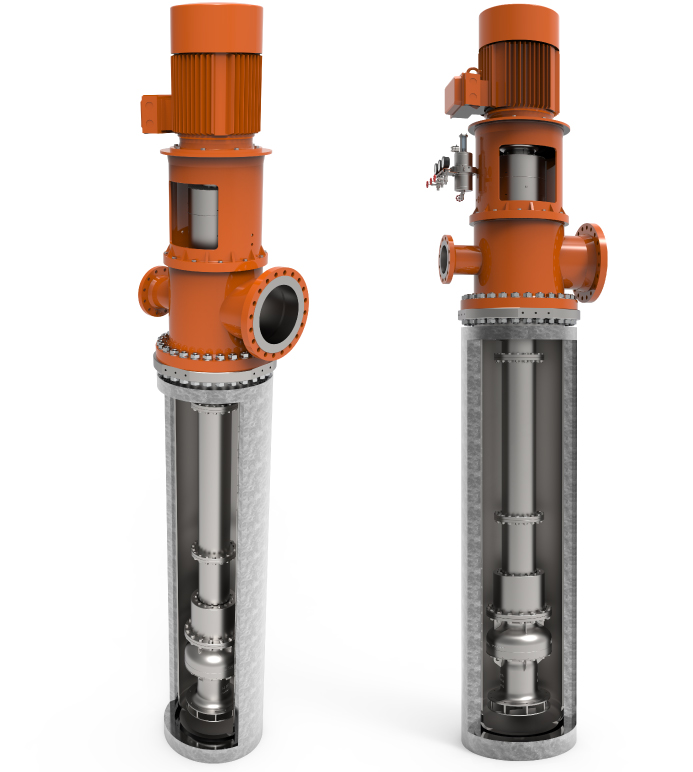
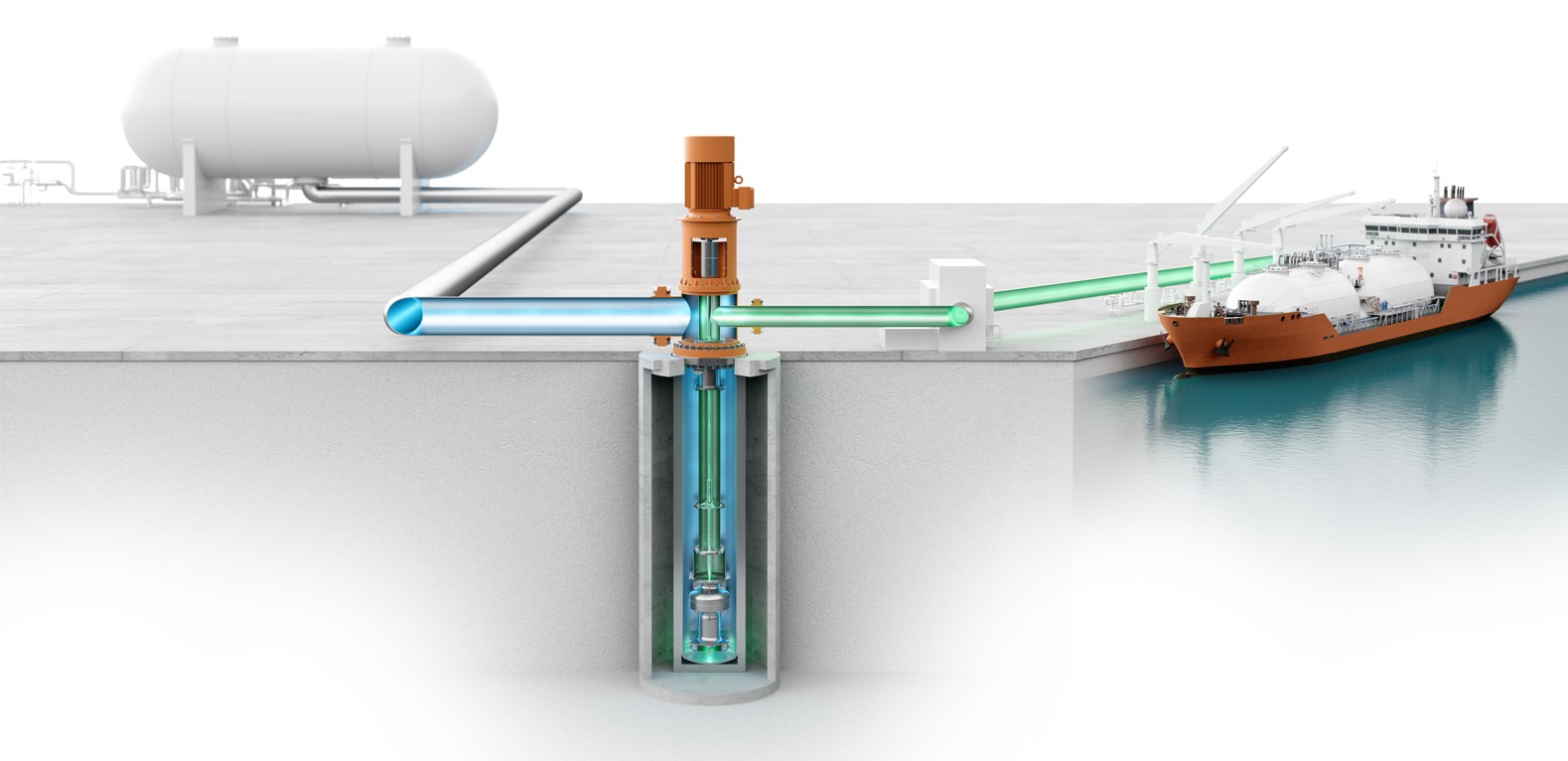
DESMI’s DesCan pump is developed for reliable transfer of liquefied CO2 in carbon capture and storage infrastructure. Installed in a can or sump below liquid level, it provides flooded suction and stable operation in applications with very low available NPSH. Based on DESMI’s deep well cargo pump experience, the design combines proven hydraulic performance with a configuration optimized for CO2 hubs, terminals, pipeline transfer, and intermediate storage.
Designed Specifically for Liquefied CO2
Most vertical pumps used in gas terminals originate from LNG or LPG service. Liquefied CO2 behaves differently and introduces several hydraulic challenges.
CO₂ systems typically operate close to saturation conditions, resulting in extremely small NPSH margins and increased sensitivity to local flashing at the pump inlet. In addition, liquefied CO2 has a significantly higher density than LNG or LPG, which leads to higher hydraulic loads on the pump.
The DesCan pump has therefore been designed specifically around the operating conditions typical for liquefied CO2 transfer systems.
Key design features include:
- Suction geometry designed to minimize the risk of local flashing
- Hydraulics optimized for high density fluids
- Stable operation under extremely low NPSH conditions
- Controlled inlet conditions through the can-mounted configuration
- Materials and sealing concepts suitable for low temperature CO2 service
Key Features
Extremely low NPSH requirement
The hydraulic section is installed below the liquid level and operates under flooded suction conditions, enabling stable operation even in challenging suction systems.
No priming required
The pump remains permanently flooded by design, eliminating the need for priming systems and auxiliary equipment.
High operational reliability
Submerged hydraulics operate under stable suction conditions independent of variations in the surface piping system.
Reduced civil work and simpler installation
The can-mounted configuration eliminates the need for pump pits in typical installations and reduces civil work requirements.
Enhanced safety
The pumped liquid is contained below grade inside the pump can, reducing the risk of leaks, spray and CO₂ accumulation around the pump area.
Compact footprint
The vertical configuration provides high hydraulic performance while minimizing horizontal space requirements.
Service friendly design
Motor, thrust bearing and mechanical seal are located above liquid level, simplifying inspection and maintenance.
Typical Applications
CO2 hubs
Centralized hubs receiving CO₂ from multiple capture sites, including truck unloading, buffer storage and transfer between storage systems.
CO2 export terminals
Transfer of liquefied CO₂ from storage tanks to ship loading systems, including batch transfer and ship loading operations.
CO2 pipeline interface
Transfer between storage tanks and onshore or near-shore CO₂ pipelines, enabling stable and continuous operation.
System Value
Traditional horizontal pumps often require complex suction arrangements, priming systems and carefully controlled tank elevation to maintain sufficient NPSH.
The can-mounted vertical design removes many of these constraints by placing the hydraulic section below the liquid level.
This enables:
- Simpler plant design without complex suction arrangements
- Greater layout flexibility as tank elevation is no longer driven by pump suction requirements
- Stable and predictable operation when handling liquefied CO2
- Reduced civil work as pump pits are typically not required
- Lower overall infrastructure CAPEX in many installations