






ESCO-TDS-(minus)100 Cryo H2: Cryogenic UHV-TDS for Diffusible Hydrogen Analysis
100_Cryo_H2_UHV_TDS_System.png)
.png)
ESCO-TDS-(minus)100 Cryo H2 — Capture the Most Elusive Hydrogen.
Diffusible hydrogen plays a critical role in hydrogen embrittlement, yet it easily escapes at room temperature. The new ESCO-TDS-(minus)100 Cryo H2 solves this by enabling ultra-high vacuum thermal desorption spectroscopy (UHV-TDS) starting from cryogenic temperatures (down to -100°C), ensuring no trace of diffusible hydrogen is lost before measurement.
Key Features of ESCO-TDS-(minus)100 Cryo H2:
• Cryogenic Start (-100°C): Stable capture and quantification of rapidly desorbing diffusible hydrogen.
• Sub-ppb Sensitivity: High-precision gas analysis utilizing proprietary UHV technology.
• Hydrogen Embrittlement Focus: Ideal for R&D in high-strength steels, automotive fasteners, and energy materials.
[Scientific Proof of Concept]
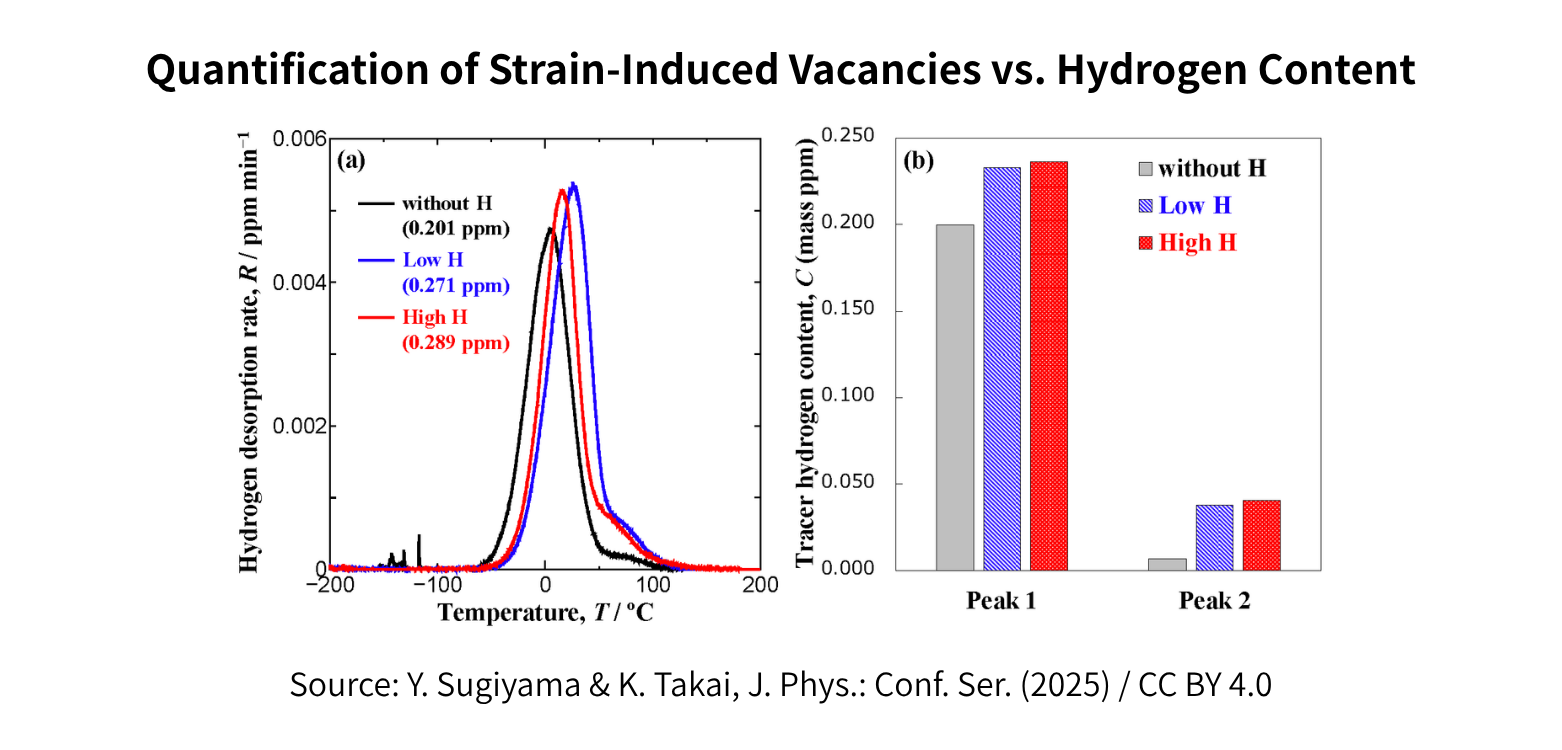
The core analytical technology of the ESCO-TDS-(minus)100 Cryo H2 is being developed and benchmarked against advanced custom L-TDS (Low-Temperature TDS) systems utilized by Prof. Kenichi Takai’s research group at Sophia University—a global authority on hydrogen embrittlement.
To demonstrate the analytical capabilities of this methodology, we have attached a recent peer-reviewed open-access paper from Prof. Takai's group. The study successfully quantifies hydrogen-enhanced strain-induced vacancies (HESIVs) using L-TDS starting from cryogenic temperatures. The ESCO-TDS-(minus)100 Cryo H2 brings this exact level of advanced academic analytical performance directly to your industrial R&D laboratory.