






Smart Power Plant Controller (SPPC)
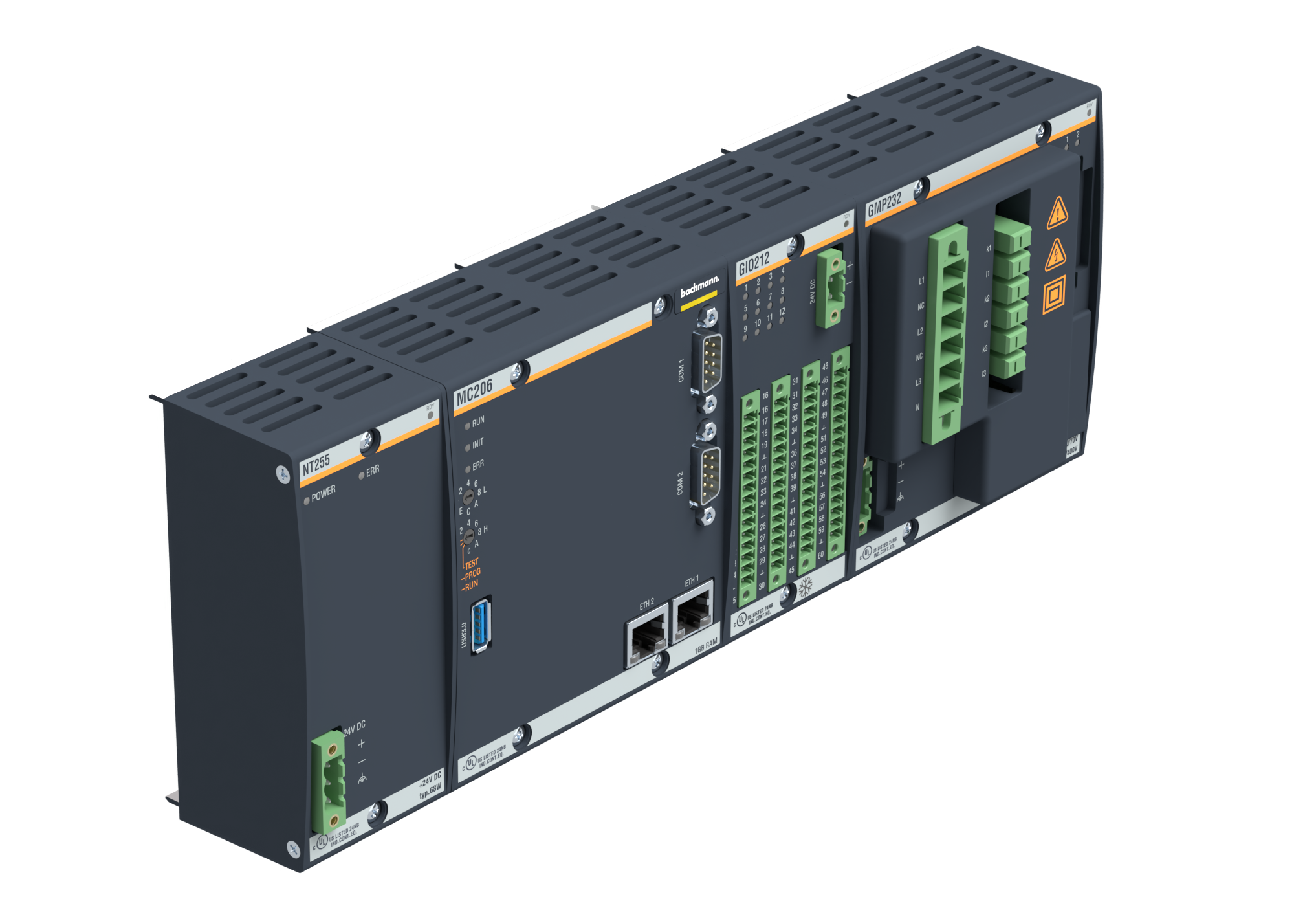
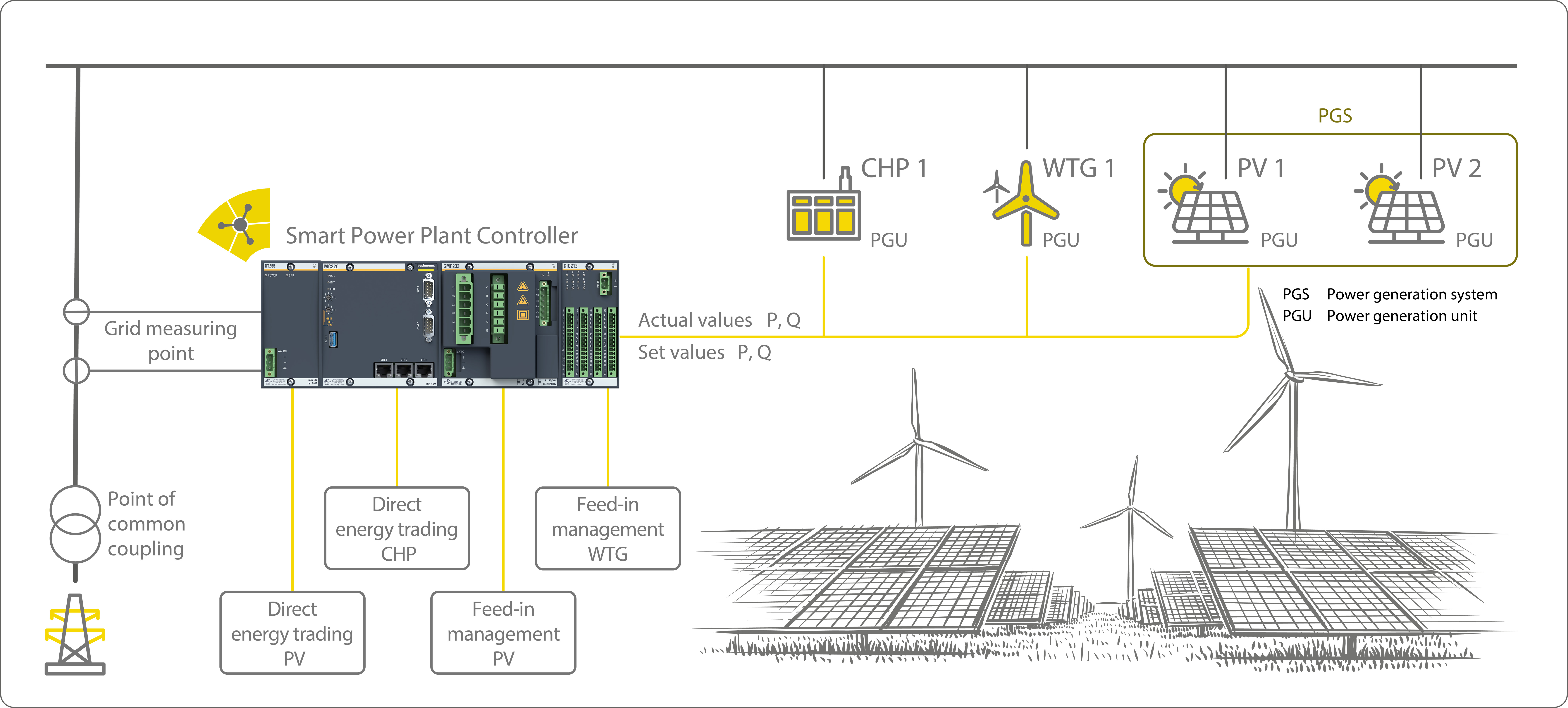
With its clever Smart Power Plant Controller, Bachmann electronic was one of the first manufacturers to launch a VDE-AR-N 4110/4120-certified power plant controller (PPC) on the market. The PPC is based on a powerful processor and the highly accurate GMP232/x2 grid detection and protection module. It considers all the functionalities required by connection guidelines when determining the setpoint for active and reactive power control, and then forwards these to the PGUs.
The existing PPC will soon also be certified according to VDE-AR-N 4130 and the European energy standard DIN EN 50549-2. In future, even more European operators will benefit from the advantages of this flexible and fast park controller.
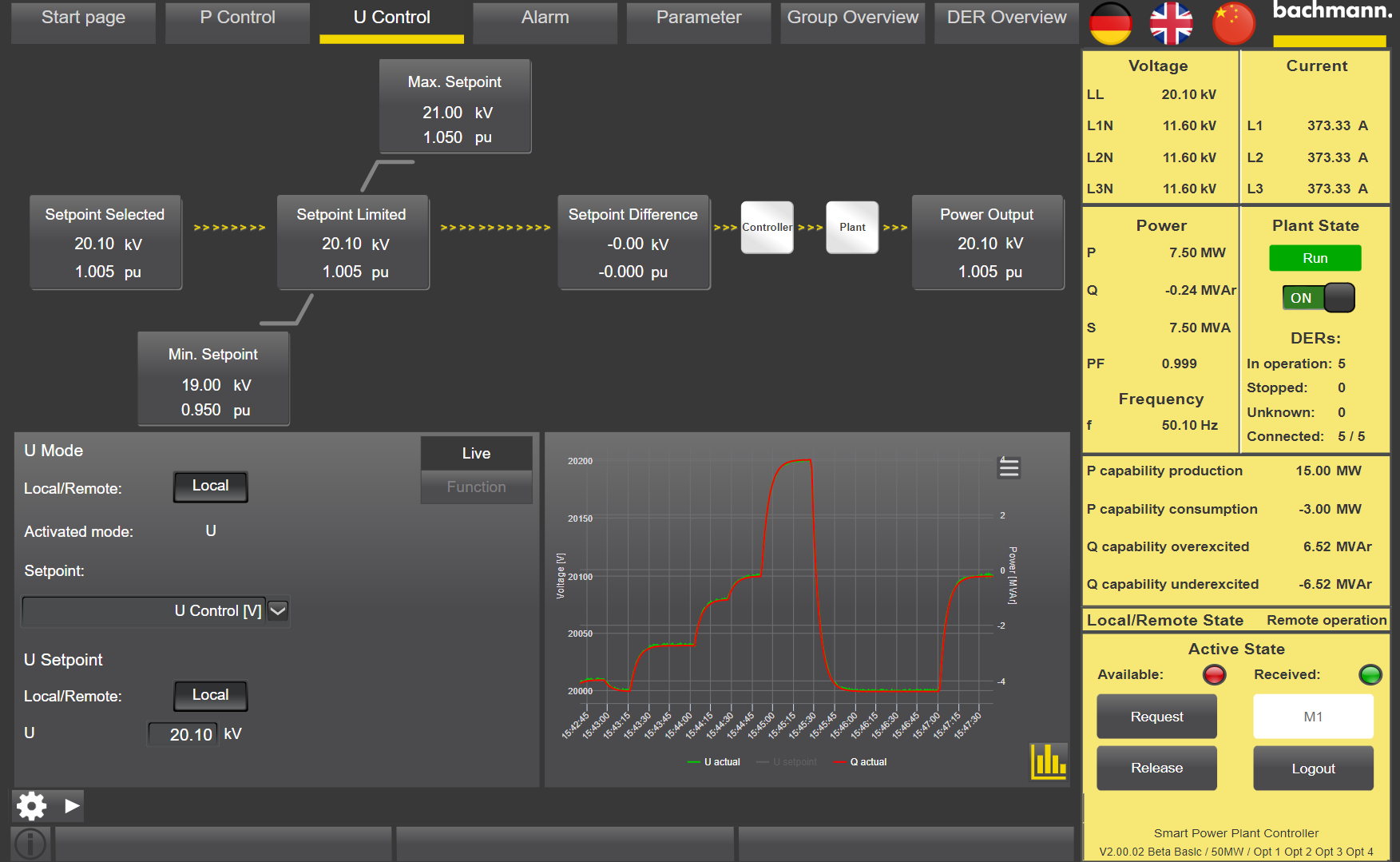
For a better overview of the different topologies and generation types, the Smart Power Plant Controller includes a local configuration and operating visualization based on the controller-integrated web server M1 WebMI pro. With its clear interface, the PPC can be easily configured – it does not require programming knowledge. Higher-level functionalities, such as primary control or the grouping and prioritization of connected PGUs, are also supported with regard to a wide variety of setpoint specifications. One particular advantage for hybrid power plants: groups can be formed independently of the type of energy generated.
Controller behavior can be adjusted at any time with just a few clicks, for example, to meet new specifications from the grid operator. In addition, PGU groups can be easily assigned to new direct marketers in no time at all.
A behavioral PC simulation from the PPC, required for plant certification, is also included. In addition to a MATLAB simulation model, the PowerFactory and PSCAD models can also be integrated into the respective grid simulation programs. Furthermore, a generic function mockup model can be provided to the certification body.
The Power Controller supports all common IEC and bus protocols for communication between PGUs, energy meters, direct marketers, and traders, as well as their simple configuration and commissioning. Thanks to the open and standardized interfaces, systems from a wide range of manufacturers can be integrated, regardless of their communication and operating requirements. For example, an existing grid meter can remain in use at the point of coupling.