Global Hydrogen Investments Exceed $130 Billion
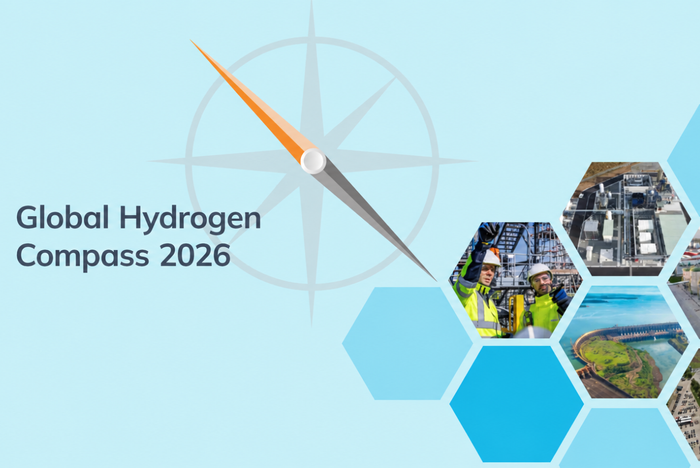
According to Ivana Jemelkova, CEO of the Hydrogen Council, the report complements the International Energy Agency’s (IEA) Global Hydrogen Review, which the IEA presented in July 2026. The key finding: The conflict in the Middle East is disrupting global supply chains for hydrogen products, investment decisions are stalling, and Chinese electrolysers are driving down prices.
The Global Hydrogen Compass 2026 shows that committed investments in clean hydrogen have exceeded $130 billion. This amount corresponds to a committed capacity of 6.9 million metric tons per year, spread across more than 570 projects worldwide. Global operating capacity nearly doubled last year. Capacity is expected to double again next year once the projects currently under construction come online.
China leads, Europe is catching up
Geographically, China remains the largest market. This is because the country accounts for more than half of the globally committed capacity for renewable hydrogen, as well as 90 percent of the operational capacity added worldwide since 2025.
Europe follows as the second-largest market and leads both in the number of projects and in relative investment growth. Since 2025, investments have risen by 35 percent.
The U.S., on the other hand, dominates the use of low-carbon hydrogen. It accounts for about 75 percent of the globally committed capacity for low-carbon H₂ and ammonia.
Governments Must Meet Their Commitments
Of the potential 11 million metric tons of annual demand for clean hydrogen that could be tapped by 2030 through existing policy measures, approximately 6 million metric tons are currently secured through measures already implemented. To tap the remaining 5 million metric tons, governments must now take action to meet existing policy commitments.
For policymakers, the top priority is to implement supportive incentives and regulations and to introduce carbon pricing mechanisms. For industry, the focus is on meeting demand in a cost-effective manner, which goes hand in hand with cost reductions and the development of necessary infrastructure.
Jaehoon Chang, Vice Chairman of Hyundai Motor Group and Co-Chair of the Hydrogen Council, summarized the report’s key finding: “Wherever countries implement hydrogen solutions tailored to their specific circumstances and provide political support for them, competitive hydrogen ecosystems take root.”
(Source: Hydrogen Council/2026)